
You’ve typed a sentence, paused, and then stared at two small words: has or have. “Anyone has” feels formal. “Anyone have” feels like something you’d hear in a meeting. Which one is actually right?
The short version: both can be correct, but they belong in different sentence types. Get the pattern once, and you’ll stop second-guessing yourself in emails, essays, and everyday conversation.
This guide breaks the rule down step by step, shows you exactly where each form belongs, and clears up why so many fluent English speakers still trip over this one.
Quick Answer First: Anyone Has vs Anyone Have
Here’s the rule in one breath: use “anyone has” in statements, and use “anyone have” only after a helping verb such as does, do, or if, mostly in questions and certain negative or conditional sentences.
| Sentence Type | Correct Form | Example |
|---|---|---|
| Statement | anyone has | Anyone has the right to ask questions. |
| Question (with does) | anyone have | Does anyone have a pen? |
| Negative (with does) | anyone have | I don’t think anyone have a spare key. ❌ → doesn’t have ✔️ |
| Conditional | anyone has / have | If anyone has objections, speak now. |
| Casual spoken question | anyone have | Anyone have a charger? (informal) |
If you remember nothing else from this article, remember this: “anyone” is singular, and “has” is its natural partner. “Have” only shows up when a helping verb like does or do has already taken the job of carrying the tense.
The Core Grammar Rule You Must Know
English verbs change form depending on the subject. “He walks,” not “he walk.” “They walk,” not “they walks.” The same logic applies to indefinite pronouns like anyone, and it’s the reason this whole question exists in the first place.
Anyone Is Always Singular
“Anyone” looks like it might refer to a crowd, but grammatically it means “any one person.” It doesn’t matter whether you’re addressing a room of five people or five hundred — the pronoun itself stays singular.
A simple trick: swap “anyone” for “he or she” and see if the sentence still sounds right.
- Anyone has the right to vote. → He or she has the right to vote. ✔️
- Anyone have the right to vote. → He or she have the right to vote. ❌
That quick substitution test settles the argument almost every time.
Common Singular Indefinite Pronouns
“Anyone” isn’t alone. A whole family of indefinite pronouns behaves the same way and takes singular verbs.
- Anyone, anybody
- Someone, somebody
- Everyone, everybody
- No one, nobody
- Each, either, neither
Every word on that list pairs with “has,” “is,” or “was” — never “have,” “are,” or “were” — in a plain statement.
When “Anyone Has” Is Correct
Declarative Statements
A declarative sentence simply states a fact or an opinion. This is the most common home for “anyone has,” and it covers the vast majority of everyday writing.
- Anyone has the chance to succeed with enough effort.
- Anyone has access to the shared folder after signing in.
- Anyone has a reason to be cautious here.
Notice the pattern: subject, then verb, then the rest of the sentence, no helping verb involved. That’s your signal to reach for “has.”
Embedded Clauses and Indirect Speech
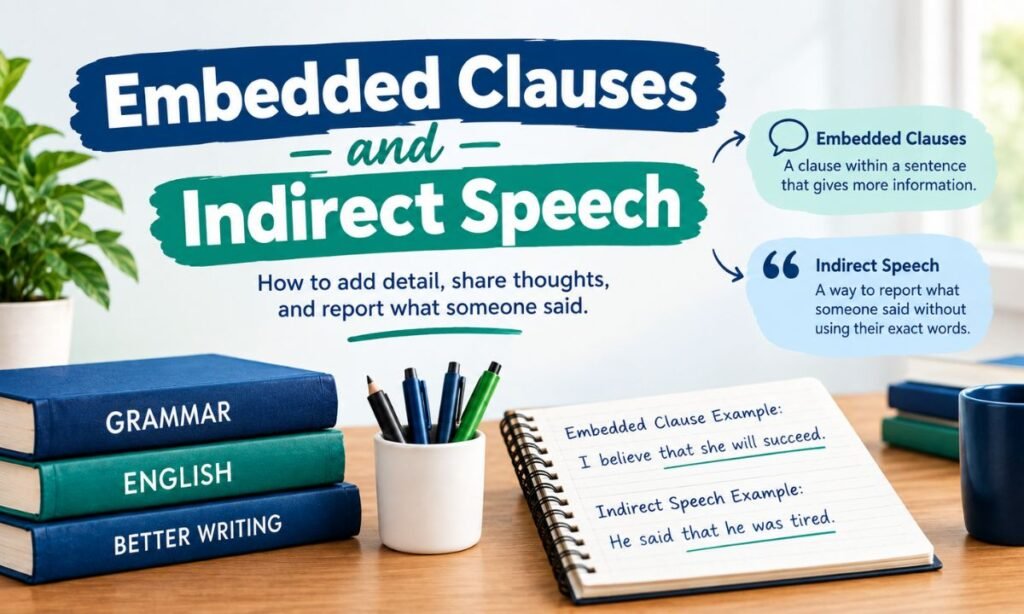
When a question gets folded into a larger sentence, it stops behaving like a question and starts behaving like a statement — even though it started life as a question. This is where writers often get caught out.
- Wrong: I wonder if anyone have seen my keys.
- Right: I wonder if anyone has seen my keys.
- Wrong: She asked whether anyone have finished the report.
- Right: She asked whether anyone has finished the report.
The word order shifts, but the subject-verb relationship doesn’t. “Anyone” still needs “has,” because the clause is functioning as a statement inside a bigger sentence, not as a standalone question.
Formal and Written English
In reports, essays, emails to clients, and anything you’d hand to an editor, “anyone has” is the safer, more polished choice. Formal writing rewards precision, and dropping the helping verb or reaching for “have” without one reads as a slip rather than a stylistic choice.
Compare:
- Casual text: Anyone have a minute to chat?
- Formal email: Does anyone have a minute to chat this afternoon?
- Formal statement: Anyone has the option to reschedule before Friday.
If you’re writing something that will be read by a boss, a professor, or a stranger evaluating your work, default to the statement pattern with “has” and the full question pattern with “does anyone have.”
When “Anyone Have” Is Correct
Direct Questions
Questions restructure the sentence. A helping verb like “does” moves to the front, and it carries the tense, which frees the main verb to drop back into its base, uninflected form — “have,” not “has.”
- Does anyone have a question?
- Does anyone have change for a twenty?
- Do any of you have anyone have information on this? (informal, redundant — avoid doubling up)
The rule of thumb: whenever “does” appears before “anyone,” the verb that follows must be “have,” never “has.” The helping verb already did the agreement work, so the main verb stays plain.
Negative Constructions
Negatives follow the same helping-verb logic as questions. “Does not” (or “doesn’t”) sits in front, and “have” follows in its base form.
- Correct: Anyone doesn’t have the password. (unusual phrasing, but grammatically sound)
- More natural: No one has the password.
- Correct: I don’t think anyone doesn’t have access — actually, I don’t think anyone lacks access.
In practice, most negative sentences with “anyone” are smoother when rebuilt around “no one” or “nobody,” but when “doesn’t” appears directly before “anyone have,” the base form stands.
Conditional and Hypothetical Sentences
Conditionals are the trickiest zone, because both forms can technically appear depending on the clause’s mood.
- Real, likely condition: If anyone has objections, please raise them now. (statement-like, so “has”)
- Formal, almost old-fashioned subjunctive tone: If anyone have objections, let them speak. (rare, formal, sounds slightly archaic today)
Modern English strongly favors “if anyone has” in nearly every everyday and business context. The bare “have” form in conditionals survives mostly in ceremonial or legal-sounding language, and most native speakers won’t use it in ordinary conversation.
Why People Keep Getting This Wrong
If the rule is this clean, why does the mistake show up so often, even from people who’ve spoken English their whole lives?
Spoken English vs Written English
Speech moves fast, and helping verbs get swallowed. “Does anyone have a pen?” easily shortens to “Anyone have a pen?” in casual talk, and that shortened version sounds completely normal out loud. The trouble starts when writers carry that spoken shortcut into an email, a report, or a school assignment where the missing “does” is expected to be there — or where the sentence needed “has” all along because it was never a question to begin with.
Word Order Illusions
Readers sometimes anchor on the word right before the verb rather than the actual subject. In a sentence like “I don’t think anyone in these meetings have the full picture,” the writer’s ear latches onto “meetings” (plural) instead of “anyone” (singular), and “have” slips in by mistake. The fix is to mentally strip out every prepositional phrase between the subject and the verb, then check what’s left.
Subject-Verb Agreement Made Simple
Here’s a short, practical checklist you can run through in seconds:
- Find the real subject of the clause — ignore words tucked inside phrases like “of the students” or “in the room.”
- Ask if that subject is singular or plural. Anyone, everyone, someone, and no one are always singular.
- Check whether a helping verb (does, do, did, doesn’t) is already present.
- If there’s no helping verb, match the main verb to the subject: anyone → has.
- If a helping verb is present, drop the main verb to its base form: does anyone → have.
Run any confusing sentence through those five steps, and the right word usually falls out on its own.
Anyone Has vs Anyone Have: Side-by-Side Comparison
| Feature | Anyone Has | Anyone Have |
|---|---|---|
| Sentence role | Statement, embedded clause | Question or after a helping verb |
| Formality | Formal and informal | Mostly informal unless paired with does |
| Needs a helping verb? | No | Usually yes (does, do, doesn’t) |
| Example | Anyone has a copy of the file. | Does anyone have a copy of the file? |
| Common error | Rare | Dropping “does” in formal writing |
| Best for | Essays, reports, professional emails | Spoken questions, casual chat |
Anyone vs Anybody: Is There a Difference?
Not really, at least not grammatically. “Anyone” and “anybody” are interchangeable indefinite pronouns, and both follow the exact same verb rules.
- Anyone has a chance to win. = Anybody has a chance to win.
- Does anyone have a map? = Does anybody have a map?
The only real difference is tone. “Anyone” reads slightly more polished and shows up more often in writing, while “anybody” carries a more relaxed, conversational feel. Choose based on the mood of your sentence, not the grammar — the grammar doesn’t change either way.
Common Mistakes (And How to Fix Them)
Mistake 1: Matching Meaning Instead of Grammar
Because “anyone” can refer to a group of people in real life, writers sometimes treat it as a plural subject. Grammar doesn’t care about the real-world headcount — it only cares about the pronoun’s built-in number, which is singular.
- Wrong: Anyone have the right to disagree.
- Right: Anyone has the right to disagree.
Mistake 2: Forgetting the Auxiliary Verb Rule
In questions and negatives, skipping the helping verb but keeping “has” creates an odd hybrid.
- Wrong: Anyone has a pen? (missing “does,” sounds unfinished in writing)
- Right: Does anyone have a pen?
Mistake 3: Copying Spoken English Into Writing
What sounds fine out loud doesn’t always survive on paper. Casual contractions and dropped helping verbs belong in texts and quick chats, not in essays or client-facing documents.
- Spoken: Anyone have the time?
- Written: Does anyone have the time?
Pronunciation Traps That Cause Confusion
Part of this mix-up isn’t about grammar knowledge at all — it’s about sound. In fast, natural speech, “has” and “have” both get reduced, and the final consonant often blurs or disappears entirely. “Anyone’s got” and “anyone have” can sound nearly identical in a quick sentence, especially to non-native listeners still training their ear.
This is one reason English learners often absorb the wrong form: they’re pattern-matching sound, not spelling. The fix isn’t better listening — it’s editing on paper with the rule in mind rather than relying on how a sentence “sounded” when you first thought of it.
Real-World Usage Examples
Everyday Conversation
- “Anyone have plans this weekend?” — perfectly normal between friends.
- “Has anyone seen my phone?” — the standard spoken question form.
- “I don’t think anyone has noticed yet.” — casual but still grammatically clean.
Workplace Communication
- “Does anyone have the latest version of the slide deck?”
- “Anyone has full access once their account is approved.”
- “Please let me know if anyone has questions before the call.”
Academic and Exam Writing
- “Anyone has the ability to develop strong writing skills through consistent practice.”
- “If anyone has doubts about the methodology, the appendix addresses them directly.”
- “It is unlikely that anyone has fully solved this problem within the given constraints.”
Academic writing leans almost entirely on “anyone has,” reserving “anyone have” strictly for direct or embedded questions.
Frequently Asked Questions
Is “does anybody have” correct?
Yes. “Does” is the helping verb, so “have” stays in its base form — this is the standard, grammatically correct question structure.
Does anyone or do anyone, which is correct?
“Does anyone” is correct, because “anyone” is singular and pairs with the singular helping verb “does,” not “do.”
Is “anyone there” grammatically correct?
Yes, as a short, informal question with the verb implied — the fuller form would be “Is anyone there?”
Have anyone seen or has anyone seen, which is right?
“Has anyone seen” is correct, since “anyone” is singular and requires “has” in this question form.
Conclusion
The choice between “anyone has” and “anyone have” comes down to one question: is a helping verb doing the work, or is “anyone” standing alone as the subject of a plain statement? Alone, it takes “has.” Behind “does,” “do,” or “doesn’t,” the main verb steps back to “have.”
Once that pattern is locked in, you’ll stop pausing mid-sentence, and your writing — whether it’s a quick message or a formal report — will carry the quiet confidence of someone who already knows the answer.